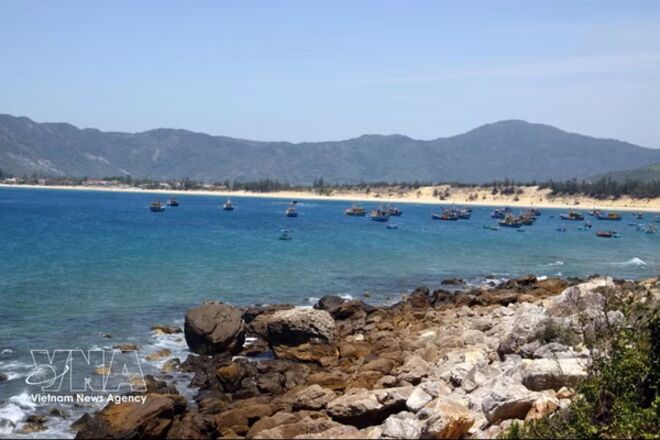
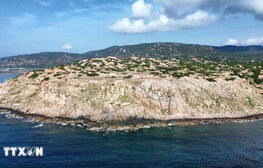
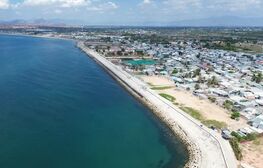
Nestling in Tan Phung 2 village of Phu My Dong commune, Mui Vi Rong (Dragon Fin Cape) is emerging as one of Gia Lai province’s most captivating coastal attractions.
Looking forward to APEC 2027, the island is fast-tracking 21 key projects, spanning transport infrastructure, urban development, technical systems, and specialised facilities designed to accommodate world-class conferences and activities.
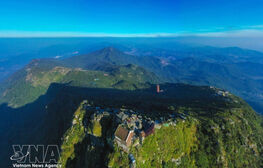
UNESCO’s inscription is grounded in criteria on the Outstanding Universal Value, underscoring the organic relationship between the sacred landscape of the Yen Tu mountains and the Con Son-Kiep Bac area, Truc Lam Buddhist thought, and the political authority of the Tran Dynasty.
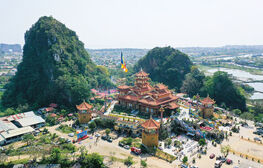
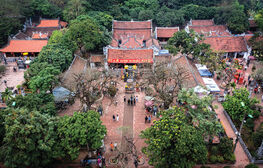
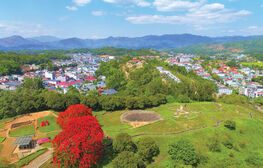
With its lasting historical, cultural, and spiritual values, the Tran temple and Pho Minh pagoda relic complex in Ninh Binh province remains an important symbol of the Tran dynasty and a major religious centre of the Red River delta.
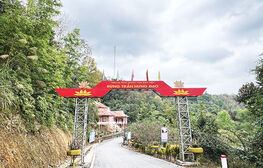
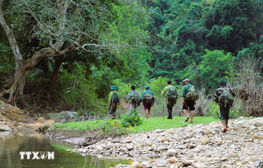
Located in Cao Bang province, Tran Hung Dao forest is recognized as the birthplace of the Vietnam Liberation Army’s Propaganda Unit, the forerunner of the Vietnam People’s Army. The site preserves the spirit of the date December 22, 1944, when 34 young soldiers gathered and solemnly took their oaths to defend the nation.
The Pu Huong Nature Reserve is one of the three special-use forests forming the core zone of the Western Nghe An Biosphere Reserve, which was granted the world status by UNESCO in 2007.
Tourism investment now focuses more on enhancing experiences, upgrading infrastructure, and developing skills for local communities. Projects only generate sustainable development when investment is tied closely to local life and livelihoods.
Thang Long Tu Tran, the four guardian temples of the imperial capital, stand as timeless sentinels of Hanoi’s thousand-year history. Built during the Ly dynasty, these sacred shrines not only safeguarded the ancient citadel of Thang Long in the four cardinal directions but also embodied the spiritual strength and cultural essence of people.
From June to September each year, Vietnam commemorates the 81-day-and-night battle at the Quang Tri Ancient Citadel, one of the fiercest engagements of the anti-US resistance war. Perched on the bank of the Thach Han River, the citadel became a crucible of fire and sacrifice, where thousands of Vietnamese soldiers gave their lives for national freedom.
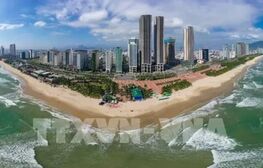
Da Nang has emerged as a key player in Vietnam’s financial innovation strategy. Its strategic location near major Asian financial hubs, modern infrastructure, dynamic business environment, and high quality of life position it well to become a regional financial node.
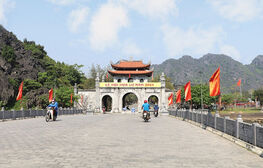
The Hoa Lu Ancient Capital Historical and Cultural Relics Conservation Center had paid due attention to the conservation of the nation’s traditional cultural values, protection of, and the environmental and service quality improvement to turn Hoa Lu Ancient Capital into a prominent cultural, historical and archaeological tourism destination on both national and international scales.
About 30 kilometres northeast of Phan Rang–Thap Cham city of the south-central province of Ninh Thuan, nestled along the coastline within Nui Chua National Park, lies one of Vietnam’s most awe-inspiring natural wonders -the Rock Park.
The Ba Chua Xu (Holy Mother of the Realm) Festival at Sam mountain in the Mekong Delta province of An Giang was officially recognized by UNESCO as intangible cultural heritage of humanity at the 19th session of the Intergovernmental Committee for the Safeguarding of the Intangible Cultural Heritage in Paraguay on December 4. With this recognition, the festival has become the 16th intangible cultural heritage element of Vietnam recognized by UNESCO.
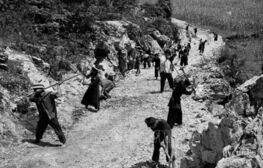
During the most challenging moments of the resistance against American imperialism, the Youth Volunteer forces - with their spirit of sacrifice and determination - made a profound contribution to the nation's historic victory in the spring of 1975.
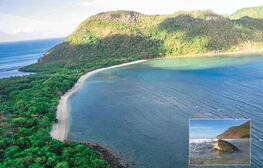
Con Dao National Park boasts not only the advantage of biodiversity in forest conservation on the island and the conservation of wetlands but also a special-use forest containing aesthetic, historical and cultural values that are significant for the tourism development and conservation efforts in the locality.
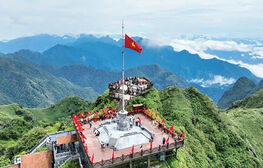
Sa Pa is among few locations in Vietnam where snow and frost now and then appear in the winter. It is famous for its breathtaking landscapes such as O Quy Ho pass - the longest, most dangerous and majestic mountain pass in Vietnam’s northwest; the UNESCO-recognized Hoang Lien Son National Park.
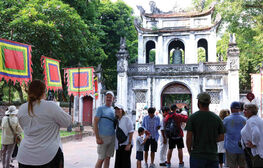
With the widespread application of digital technology in the preservation and promotion of historical, cultural, educational and sculptural values of the special national relic site of Van Mieu-Quoc Tu Giam (the Temple of Literature Complex), the complex is expected to become the country’s one of the top destinations in terms of smart tourism.
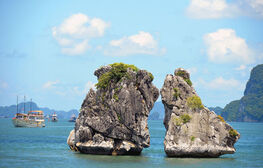
Quang Ninh province has adopted solutions to conserve and promote outstanding values of Ha Long Bay - a World Heritage Site and Natural Wonder, with a view to contributing to its sustainable tourism and socio-economic development.
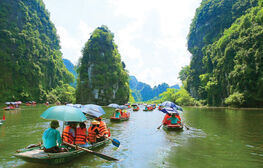
Ninh Binh province has planned to develop heritage tourism products in the Trang An Landscape Complex in order to tap its potential for the provincial socio-economic development.
Ninh Thuan province possesses significant potential and advantages to develop its maritime economy and thrive from the abundance of the sea. By 2025, the province aims for its maritime economy to constitute 41-42 percent of its total GRDP.
With 45 component relics, the Dien Bien Phu battlefield relics complex has contributed to not only reminding Vietnamese people and young generations about traditions and the heroic memories that resounded across the five continents and shook the globe but also bringing economic value to Dien Bien province.